
 English
 العربية
 ไทย
ไทย Melayu


Secure Rock Climbing Anchor Point for Training & Competition
To give useful guidance I need a bit more context, because “secure anchor point” can mean very different things:1. Where will this be installed? - Indoor home wall (wood framing, concrete, brick)? - Commercial gym? - Outdoors on natural rock?2. What is the purpose of the anchor? - Top-rope practice? - Lead-fall practice? - Self-belay / TR solo? - Just for bodyweight training (hangboard, rings, light falls)?3. What tools and skills do you have? - Comfortable drilling into concrete/brick? - Able to locate studs in drywall? - Familiar with load ratings and PPE standards?Without those details, I can outline the main safe options and principles, but you should treat this as planning info—not as a substitute for an on-site inspection by a qualified person.--- Core safety principles- Use certified hardware only - Climbing-rated bolts, hangers, and carabiners (CE/UIAA, EN, or equivalent). - Industrial fall-arrest or anchor hardware (EN 795, ANSI Z359, etc.) if not using climbing gear.- Know your substrate and its load capacity - Solid concrete / sound brick / stone: best for heavy loads and fall training (with correct bolts). - Wood framing: only into solid structural members (studs/joists), not drywall or trim. - Never into plasterboard alone, hollow brick, or unknown/weak material for fall loads.- Redundancy for fall-related anchors - For any anchor that might see a real climbing fall, use at least two independent, equalized points. - Each point should be strong enough on its own, and the system should be stronger than the expected fall forces (multiple kN).- Professional assessment for real fall loads - If you plan to take actual climbing falls, have the anchor designed/approved by: - A professional climbing wall builder, or - A structural engineer or rope-access professional familiar with fall arrest.--- Typical scenarios and recommended approaches 1. Indoor wall / garage for top-rope or lead-fall trainingBest practice: - Construct a proper climbing wall frame: - 2×6 or larger studs, securely attached to existing framing or floor/ceiling. - Top beam tied into structural elements (rafters/joists or concrete).- Use commercial climbing wall t-nuts and bolts for holds, and: - For top anchors: - Two stainless steel glue-in or mechanical expansion bolts in concrete OR - Two through-bolted steel brackets through a strong beam (backed with large washers/plates). - Use two opposite-and-opposed locking carabiners or commercial anchor rings/chains.If you only have standard walls (drywall over studs):- Locate studs with a reliable stud finder.- Consider mounting a steel plate or a thick hardwood beam (e.g., 2×10) anchored into multiple studs, then attach climbing anchor hardware to that.- Do not rely on a single lag screw in a stud as your fall anchor.--- 2. Anchor in concrete or masonry (for bodyweight or light dynamic loads)For pull-ups, rings, hangboard, light rope work (no big lead falls):- Use expansion anchors or through-bolts rated >10 kN.- Attach a steel ring plate or commercial wall/ceiling mount (look for climbing or fall-arrest certification).- Follow manufacturer torque specifications and edge/spacings strictly.For more serious training (fall practice/top-rope):- Use two independent anchors: - Stainless mechanical expansion or chemical (glue-in) anchors of 10–12 mm diameter, embedded to spec. - Spaced 15–30 cm apart horizontally, not near edges. - Equalize with climbing slings or chains.Concrete quality and installation are critically important—if uncertain, get professional help.--- 3. Using existing structural steel or big timbersIf you have:- A large steel I-beam or- Substantial glulam or solid timber beam:You can:- Wrap with a wide nylon industrial sling or climbing-rated sling if: - Beam edges are not sharp / are well protected (edge protection or padding). - You accept that the beam itself is structurally adequate (ask an engineer if in doubt).Or:- Through-bolt a plate or eye-bolt with: - Structural-rated eye-bolt (not hardware-store eye screws). - Large washers or backing plate to spread load. - Proper nut and lock system (nylon lock-nut or double-nut).Again, for taking actual falls, get professional verification.--- 4. What not to do- No anchors in: - Drywall/plaster alone - old / crumbly brick - hollow block without proper chemical anchors and engineering- No non-rated hardware: - Cheap eye-bolts, screw hooks, or anchor points not load-tested or certified.- No single-point anchors for fall loads (except in very controlled, engineered systems).--- 5. If you’re training skills (not taking falls)If this is for:- practicing clipping, anchor building, belay transitions, etc. at ground level - or using minimal load (bodyweight on a short lanyard, no dynamic falls),You can:- Use a stout wall bracket or steel ring anchored to several studs or a concrete wall.- Keep rope slack minimal and avoid bouncing/falling into the anchor.- This drops required strength significantly, but you should still aim for climbing- or PPE-rated hardware.--- 6. Documentation and inspection- Keep product specs and installation instructions for all hardware.- Inspect regularly for: - Looseness, rust, cracks in the wall/beam, deformation.- Retire any carabiners/maillons with sharp edges, deep grooves, or heavy corrosion.---If you tell me:1) Indoor/outdoor and wall/ceiling type 2) Exact use (e.g., “home top-rope anchor for 10 m wall” vs “just hangboard + TR solo practice, no falls”) 3) What tools/materials you can use I can propose a specific anchor design (hardware list, spacing, and basic installation steps) appropriate to your situation.
Produto
Categoria:
-
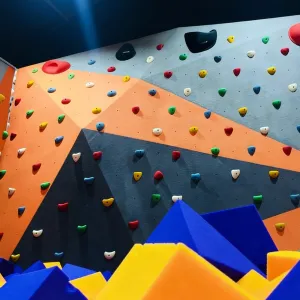
Secure Rock Climbing Anchor Point for Training & Competition
Sua classificação: Development SeriesVistas: 15Número:Tempo de liberação: 2026-03-21 08:49:38Secure Rock Climbing Anchor Point for Training & Competition - Complete Product Content1. Product Introduction The Secure Rock Climbing Anchor Point for Training & Competition is a professional-grade safety component engineered specifically for high-demand climbing scenarios—including professional training, competitive events, and intensive practice sessions. Crafted with high-strength, corrosion-resistant materials and a reinforced structural design, it serves as a stable, reliable connection point for climbing ropes, quickdraws, harnesses, and other climbing equipment. Fully com...
Notícias
Categoria:
Nenhum resultado de pesquisa!
Caso
Categoria:
Nenhum resultado de pesquisa!
Vídeo
Categoria:
Nenhum resultado de pesquisa!
Download
Categoria:
Nenhum resultado de pesquisa!
Recrutamento
Categoria:
Nenhum resultado de pesquisa!
Produtos recomendados
Nenhum resultado de pesquisa!




 Whatsapp
 Telefone